Downtown Bryan History
A cultural district, a century and a half in the making.
In the beginning
Like many Texas communities in the mid- and late-19th century, Bryan began as a small-town stop along the state's expanding railway system. But almost from the start, Bryan was different — it quickly distinguished itself from the many other railway stops across the state by flourishing into a vibrant, permanent center of business and trade.
In 1860, William Joel Bryan — nephew of Stephen F. Austin — sold a single square-mile tract north of Millican to Houston & Texas Central Railroad directors Abram Groesbeck and W.R. Baker for $3,200. The townsite was named in his honor. On Aug. 19, 1867, the first train steamed into Bryan amidst a gala celebration.
A city organized
Bryan's businessmen chose locations that suited their own purposes rather than the city plan — building on the west side of the tracks where lots were cheaper and loading was easier. That's how Main Street landed on its present site. Bryan was formally incorporated by act of the Texas Legislature in 1871, and by 1870 it had replaced Millican and Boonville as Brazos County's center of commerce.
Non-official associations for agriculture, trade, and culture sprang up through the 1870s, and in 1902 the Carnegie Library was founded with a $10,000 gift from Andrew Carnegie — today the oldest existing Carnegie Library in Texas.
A diverse community
In the late 1800s, German, Czech, and Italian immigrants settled the Brazos River Valley. Bryan's North Side has historically been home to the city's African-American community — newly freed families settled around Orleans and Preston streets in a neighborhood known as Freedmanstown, and the Martin Luther King Jr. corridor remains a primary artery today. Hispanic families have held land in Brazos County since before its inception, and the demographics of Bryan now directly reflect those of the entire state of Texas.
Time marches on
Bryan survived the Great Depression and grew through the post-war years on cotton, cattle, oil, and the railroad. The rise of Townshire (1958) and Manor East Mall (1972) pulled commerce away from downtown, and the Central Business District began a slow decline. A revitalization movement started in the late 1980s, and in 1992 Bryan became a Texas Main Street City, receiving design and technical assistance from the Texas Historical Commission.
Today, businesses are opening, expanding, and relocating in Downtown Bryan — shops, restaurants, hotels, galleries, and venues working together to restore the district to the thriving hub of its glory days.
- 1
1860 · William Joel Bryan sells the townsite
Nephew of Stephen F. Austin sells a square-mile tract north of Millican to H&TC Railroad directors for $3,200 — the future city is named in his honor.
- 2
1866 · County seat moves to Bryan
Anticipating the railroad, Brazos County citizens vote 190–42 to move both the county seat and post office from Boonville to Bryan.
- 3
1867 · The first train arrives
On Aug. 19, the first H&TC train steams into Bryan amidst a gala celebration, cementing the town as the region's commercial hub.
- 4
1871 · City of Bryan incorporated
The Texas Legislature formally incorporates Bryan; a new brick courthouse is completed the same year.
- 5
1902 · Carnegie Library founded
A $10,000 gift from Andrew Carnegie establishes what is today the oldest existing Carnegie Library in Texas.
- 6
1992 · Texas Main Street City
Bryan joins the Texas Main Street program, receiving design and technical help from the Texas Historical Commission for downtown revitalization.
- 7
2005 · The first First Friday
Downtown Bryan launches First Friday — an evening when galleries, studios, shops, and restaurants stay open late with live music and art in the street. What began as a small gathering of merchants and artists grew into the district's signature monthly celebration, drawing thousands to Main Street on the first Friday of every month.
- 8
2010 · The Queen Theatre is saved
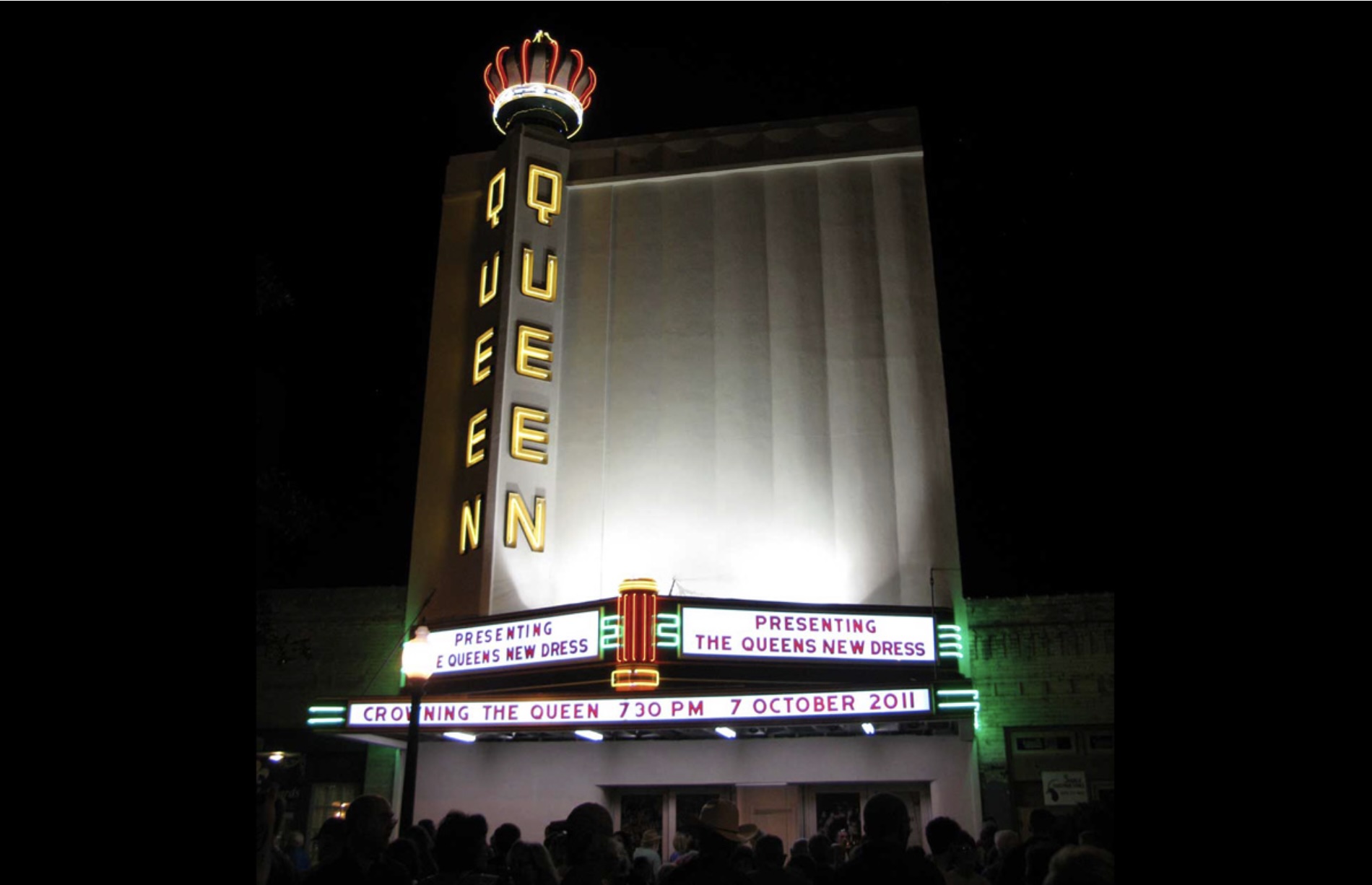
In June 2010, the Downtown Bryan Association purchases the long-shuttered Queen Theatre — rebuilt in 1939 in the Streamline Moderne style by Dallas architects Pettigrew & Worley — using donations from concerned citizens. A committee of local architects donated their time and talents to restore the façade, including the marquee, the rotating crown, and the iconic "QUEEN" letters. Inside, only the structural elements survived, and the rest was rebuilt. Today the Queen welcomes the community for films and events and stands as an icon of downtown's revitalization.
- 9
2025 · The Kimbell Art Center opens
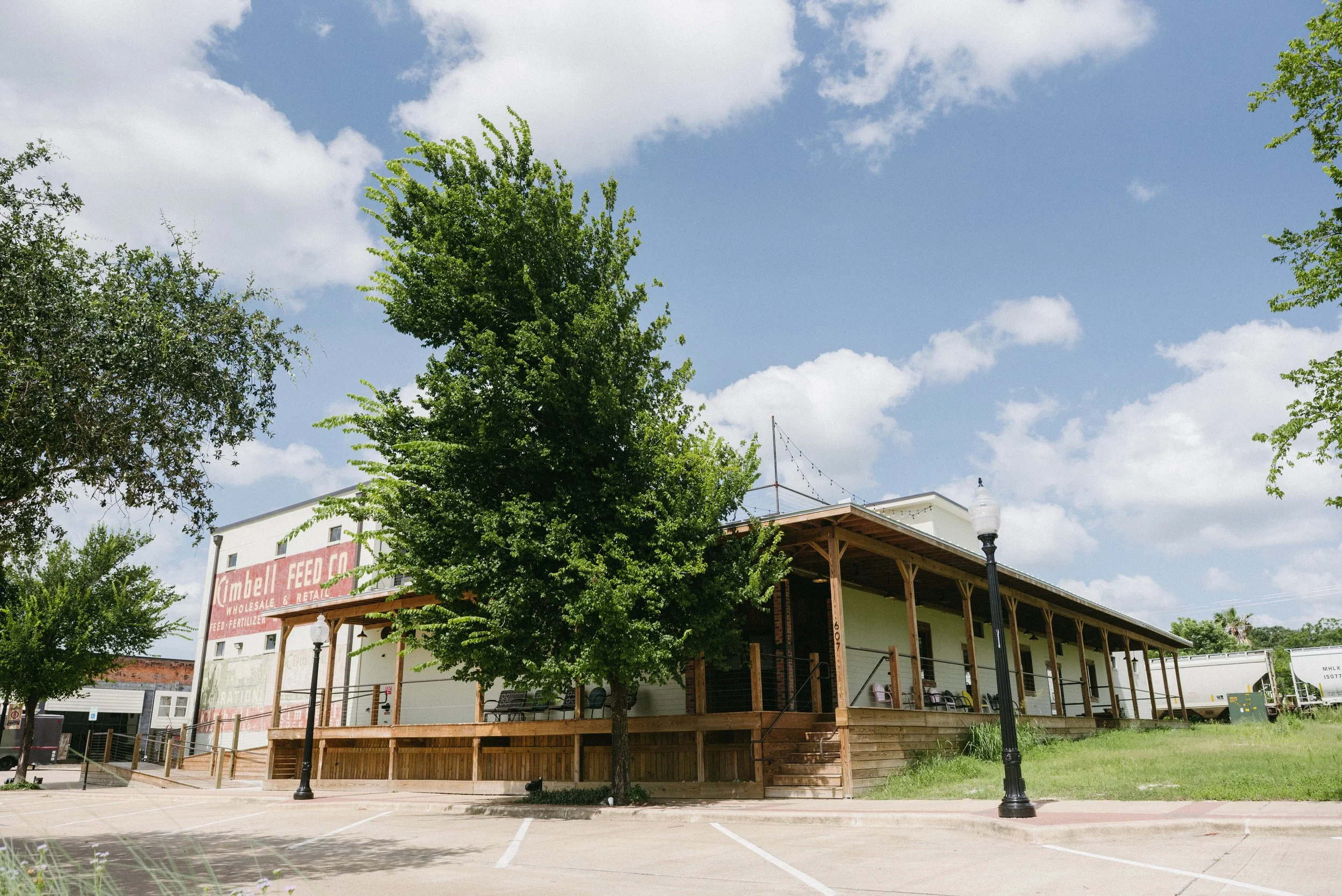
In October 2025, the Kimbell Art Center opens at 607 N. Main — a restored downtown landmark reimagined as a cultural event center and gallery, giving Downtown Bryan a permanent home for exhibitions, performances, and community arts programming.
- 10
Today · A renewed cultural district
Shops, restaurants, hotels, and galleries fill the historic storefronts — Downtown Bryan is once again the thriving hub of its glory days.